In 2026, dryer vent cleaning is no longer optional maintenance.
It is insurance protection.
Across Colorado and nationwide, insurance companies have tightened home insurance maintenance requirements in response to rising dryer fires and increasing claim payouts. Many updated policies now include maintenance language that directly affects insurance coverage eligibility.
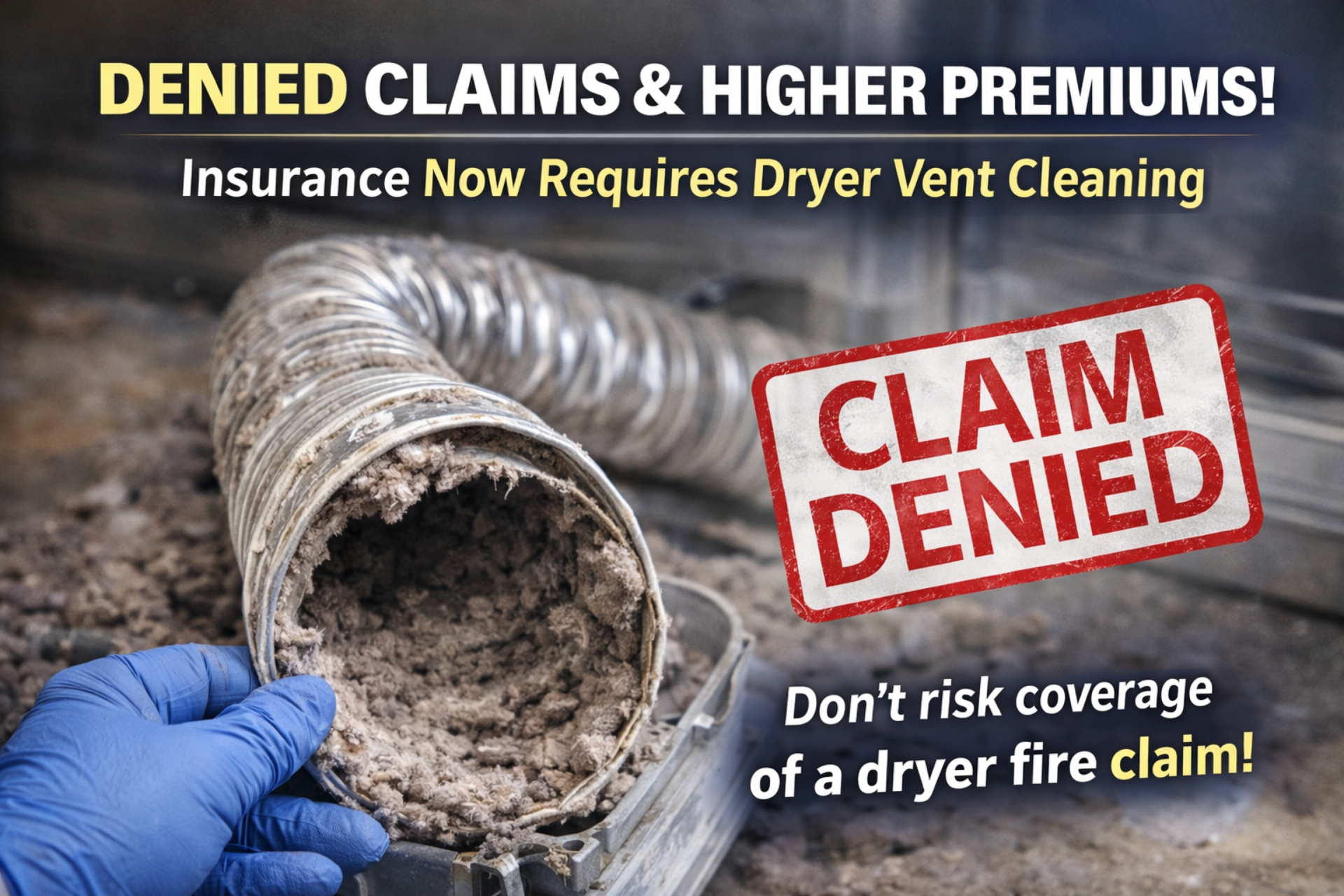
If a fire occurs and you cannot prove recent professional service, a dryer fire insurance claim denied situation is possible.
This shift changes everything.
Why Insurance Companies Are Changing Policy Standards
Dryer fires remain one of the leading causes of preventable home fires in the United States.
According to national fire administration reporting, lint buildup inside clogged dryer vents is a primary ignition source. When airflow becomes restricted, heat rises. That heat turns a small blockage into a serious fire hazard.
Insurance carriers have responded by tightening risk standards.
They are seeing:
- Increased fire damage payouts
- More total loss events
- Higher repair costs
- More frequent claim denials tied to neglect
As a result, many carriers updated their home insurance maintenance requirements in 2026 to reduce preventable fire claims.
What Are Home Insurance Maintenance Requirements?
Modern policies often include maintenance clauses.
These clauses state that coverage may be reduced or denied if the homeowner failed to properly maintain the property.
In simple terms, insurance coverage may not apply if neglect contributed to the damage.
For dryer systems, this means:
If clogged dryer vents caused overheating and you cannot show proof of regular clean service, the insurance company may question liability.
That is where denied claims begin.
How a Dryer Fire Insurance Claim Denied Scenario Happens
Here is a common example:
- Lint buildup restricts airflow in a vent line.
- The dryer overheats during normal use.
- A fire starts inside the wall cavity.
- Fire spreads and causes structural fire damage.
- The homeowner files a claim.
- The adjuster investigates maintenance history.
If no professional documentation exists, the insurer may argue wear and tear or neglect contributed to the loss.
That can result in:
- Reduced payout
- Delayed processing
- Partial coverage
- Full dryer fire insurance claim denied decision
Even when policies typically cover accidental fire damage, maintenance neglect can complicate the outcome.
Dryer Vent Insurance Claims Are Under More Scrutiny
In 2026, insurers increasingly review dryer vent insurance claims carefully.
They may request:
- Service invoices
- Maintenance records
- Inspection reports
- Proof of airflow testing
- Evidence of prior dryer vent repair
Insurance companies want documentation that shows the homeowner took reasonable steps to reduce the risk.
Without it, claim denials become more likely.
Why DIY Cleaning May Not Be Enough
Cleaning the lint screen after each load is important.
However, it does not remove lint buildup inside:
- Long vent runs
- Wall cavities
- Roof terminations
- Exterior duct elbows
Homeowners often believe a store bought brush or vacuum attachment qualifies as proper maintenance.
From an insurance perspective, that may not meet documentation standards.
Professional service provides:
- Third party verification
- Detailed invoice records
- Inspection notes
- Confirmation that clogged dryer vents were cleared
That documentation strengthens your position during any insurance review.
Dryer Vent Repair and Insurance Protection
In some cases, cleaning alone is not enough.
Crushed duct lines, disconnected joints, improper materials, or excessive length create ongoing fire hazard conditions.
Professional dryer vent repair may be required to bring the system up to safety standards.
If a system was previously flagged for repair and left uncorrected, that could influence insurance coverage decisions.
Addressing both cleaning and necessary dryer vent repair reduces the risk of future denied claims.
Preventing Fire Insurance Premium Hikes
Insurance companies evaluate risk annually.
Homes with documented maintenance often demonstrate proactive ownership. That reduces the risk profile.
Homes without documentation may appear higher risk, especially in multifamily buildings or older properties.
Professional service:
- Reduces the risk of dryer fires
- Supports underwriting reviews
- Helps prevent fire insurance premium hikes
- Protects long term policy stability
The cost of annual service is small compared to higher premiums or uncovered losses.
Beyond Fire: Secondary Risks
Clogged dryer vents can also contribute to:
- Water damage from condensation buildup
- Mold growth in wall cavities
- Damage to personal property stored near the dryer
- Reduced dryer efficiency and overheating
While insurance policies typically cover sudden and accidental events, long term neglect can trigger coverage disputes.
Preventative maintenance protects more than just the dryer. It helps protect your home and the contents inside it.
Who Should Be Most Concerned in 2026?
Certain homeowners face greater scrutiny:
- Condo owners
- Townhome residents
- Multifamily landlords
- Homes over 10 years old
- Properties with prior insurance claims
In shared wall environments, one dryer fire can affect multiple units. Insurance companies know this.
That is why documentation now matters more than ever.
What Counts as Acceptable Proof?
Insurance carriers generally expect:
- Licensed company name
- Service date
- Property address
- Description of work performed
- Technician verification
Dryer Vent Techs provides a digital Compliance Receipt after every service.
This professional dryer vent receipt for insurance includes full documentation formatted for record retention. You can store it digitally or print it for your insurance file.
Having this documentation provides peace of mind.
Dryer Vent Cleaning Is Now Financial Protection
In the past, vent cleaning was seen as basic upkeep.
In 2026, it supports:
- Insurance coverage eligibility
- Claim approval strength
- Premium stability
- Risk reduction
- Liability protection
Regular clean service reduces the risk of dryer fires and supports policy compliance.
It also protects your personal property and strengthens your claim position if something unexpected occurs.
Call to schedule your dryer vent inspection today.