Welcome to a Colorado winter! While we all love the stunning snowdrifts and the cozy feeling of being indoors, winter brings a hidden and potentially deadly hazard right inside your laundry room.
As the newly named 2025 Nextdoor Neighborhood Fave dryer vent cleaning Colorado specialist, Dryer Vent Techs sees a predictable spike in emergency calls every December, and it’s almost always caused by one thing: ice and snow turning a simple lint clog into a major disaster.
The problem is simple yet severe: freezing exterior temperatures meet hot, moist dryer exhaust. This combination creates a blockage of ice and lint that is virtually impenetrable.
This poses a severe dryer vent fire hazard for electric dryers and a life-threatening Carbon Monoxide (CO) risk for homes with gas dryers.
If your dryer is taking twice as long to dry clothes—or worse, if it suddenly stops—you might be facing the “Colorado Vent Trap.” We’re here to break down the three unique winter hazards that demand professional attention and why a basic cleaning won’t solve a frozen dryer vent.
Hazard 1: The Fire-Log Formation
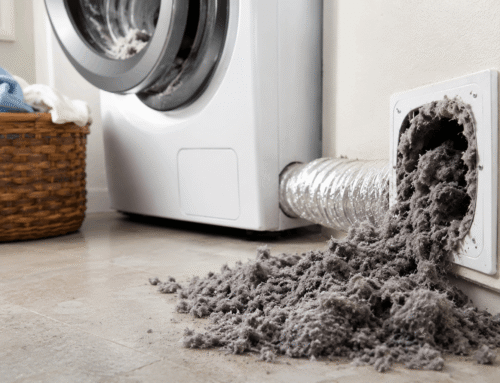
When we talk about a dryer vent clogged in winter, we’re not just talking about lint; we’re talking about an ice-hardened clog we call the “Fire Log.”
The Science of the Frozen Clog
Every time you run your dryer, the machine expels hot, humid air. In the summer, this moisture harmlessly dissipates outside. But when that hot, moist air meets freezing temperatures inside your vent pipe, two things happen:
- Condensation: The water vapor immediately cools and condenses into liquid water inside the pipe.
- Freezing: This water runs back down the pipe and quickly freezes upon contact with the massive layers of lint already accumulated inside.
The resulting mass—a mixture of dense, highly flammable lint and ice—creates a blockage that is much harder and more dangerous than a simple dry lint clog.
If your dryer vent is frozen open or dryer vent frozen shut due to this material, the airflow is completely choked off.
The Fire Risk Escalation
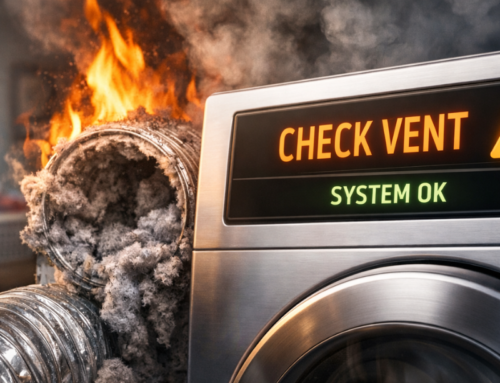
With the vent blocked by this solid “Fire Log,” your dryer cannot exhaust heat. This causes the internal components to overheat rapidly. For homeowners and property managers across Colorado, this significantly increases the risk of a severe dryer vent fire hazard.
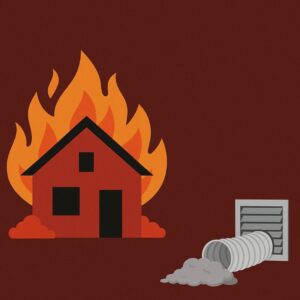
The appliance components reach ignition temperature, and the frozen-hardened lint becomes a direct source of fuel.
If you suspect your dryer vent ice buildup is severe, attempting a DIY fix can be risky. The blockage must be completely thawed and professionally removed without damaging the vent line—a service few non-specialists can provide.
Don’t risk a winter fire. Schedule your specialized cleaning with Dryer Vent Techs today at (720) 257-8155.
Hazard 2: CO Backdrafting (The Silent Killer)
This is perhaps the most life-threatening danger of a dryer vent frozen or dryer vent frozen shut scenario, and it specifically targets homes with gas dryers.
When a gas dryer runs, it burns natural gas, producing heat and, critically, Carbon Monoxide (CO) as a byproduct. This odorless, colorless, and deadly gas must be safely vented outside.
The Backdraft Danger
If the vent pipe is blocked by a frozen dryer vent or a “Fire Log” (Hazard 1), the exhaust has nowhere to go. The dryer’s powerful internal fan forces the deadly CO gas to backdraft into your laundry room and throughout your home or multi-unit property.
This means that a dryer vent clogged in winter is not just an inconvenience; it becomes an active carbon monoxide generator aimed directly at your living space.
This is why the winter months see the highest rates of carbon monoxide from dryer issues, particularly in Colorado where temperatures drop so quickly.
For property managers of apartments, condos, hotels, and resorts, this liability is massive. Ensuring your complex is protected against CO backdrafting is a non-negotiable safety priority that requires professional dryer vent cleaning Denver, Colorado.
Hazard 3: Snow Burial (The Sudden Blockage)
The final hazard is the simplest but most immediate: heavy Colorado snow and wind creating massive snowdrifts.
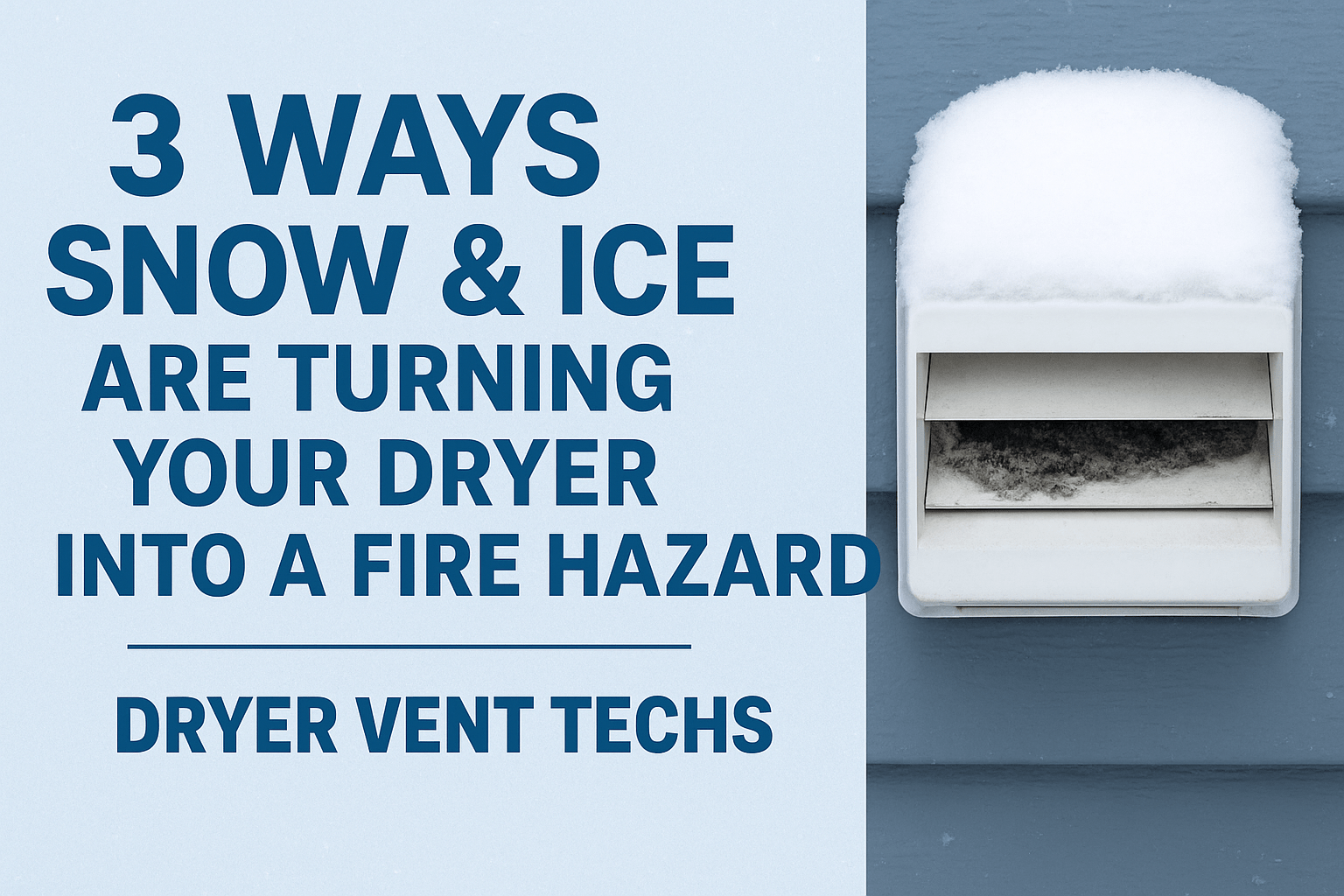
Many homes, especially those in the Denver metro area or mountain resorts, have low-sitting exterior vent terminations. When snow flies and drifts pile up, these exhaust points can become completely snow covered dryer vent openings.
Why Snow Burial is an Immediate Crisis
When the vent is buried, airflow is immediately reduced to zero. Unlike a slow lint buildup, snow burial instantly creates a dangerous condition that triggers overheating and, for gas dryers, instant CO backdrafting.
If a dryer vent is frozen shut or blocked by snow, the dryer will struggle, run hot, and often shut off quickly. Repeatedly trying to restart the dryer under these conditions is hazardous.
We promote specialized vent installation and modification (such as elevating vent hoods) to prevent this easily avoidable crisis.
Prevent immediate airflow shutdown. Call Dryer Vent Techs today to discuss in detail your customized.
The Only Defense: Why Local Expertise is Key to Winter Safety
When winter strikes Colorado, the stakes are simply higher. You wouldn’t trust a general mechanic to fix a specialized engine, so why trust your home’s complex, life-safety venting system to anyone but a specialist?
Dealing with the combination of freezing temperatures, heavy snow load, and long vent runs requires specific knowledge that standard cleaning services lack.
The True Cost of Inaction
Ignoring a dryer vent frozen situation or a snow covered dryer vent may save a few dollars in the short term, but it introduces massive long-term costs and risks:
- Appliance Damage & Wasted Energy: An overheating dryer works twice as long, wearing out components and doubling your utility bills.
- The Fire Threat: The buildup caused by dryer vent ice buildup creates a dense, volatile clog, escalating the dryer vent fire hazard from minor risk to major liability.
- The Silent Killer: For gas dryers, any blockage can lead to backdrafting, increasing the risk of carbon monoxide from dryer incidents, which is the gravest consequence of neglect.
Why Choose a Colorado Vent Specialist?
Dryer Vent Techs is dedicated to protecting properties across the Denver Metro area. We understand the specific climate challenges here—from rapid temperature drops that cause condensation to the heavy, drifting snow.
We don’t just clean; we inspect and provide solutions tailored to preventing the unique “Colorado Vent Trap” from happening again.
Choosing us means choosing a team that knows how to safely mitigate ice, ensure proper fire code compliance for commercial properties, and keep your family, tenants, and business safe all winter long.
Ensure total winter safety. Book your professional dryer vent service now at (720) 257-8155.

FAQs: Staying Safe This Colorado Winter
Why is my dryer vent frozen open or closed right now?
Your dryer vent is likely blocked by a mixture of lint and ice—the “Fire Log.” The hot, humid air from the dryer met the freezing air outside and condensed/froze onto the existing lint inside the pipe, causing the dryer vent frozen shut condition.
Can a dryer vent clogged in winter really cause carbon monoxide from dryer?
Yes, absolutely. If you have a gas dryer, any blockage—from ice, lint, or snow—will force the deadly, odorless CO gas to backdraft into your home instead of exhausting outside. This is a severe, life-threatening risk.
What are the immediate signs that my dryer vent is frozen?
The most common signs include: 1) Clothes taking twice as long to dry, 2) The dryer running extremely hot to the touch, and 3) The appliance quickly shutting off. If you see your exterior vent termination is a snow covered dryer vent, shut off the dryer immediately.
How often should I get dryer vent cleaning Colorado in the winter?
While we recommend cleaning every 6 to 12 months, if your system is long or complex, or if you are running a commercial laundromat, a pre-winter cleaning (October/November) is essential. If you notice any of the above signs in December, call us immediately for a safe, specialized cleaning.
I have a low-sitting vent. Is this a dryer vent fire hazard?
A low-sitting vent is a serious liability, especially in Colorado. It is highly susceptible to becoming a snow covered dryer vent, which immediately halts airflow and creates a rapid overheating condition. Dryer Vent Techs specializes in dryer vent modification to elevate these vents for year-round safety.
Don’t Let Winter Turn Your Dryer into a Fire Hazard
A clean, properly vented dryer is the best protection against fire and carbon monoxide poisoning this winter. Don’t rely on generic cleaning services; dealing with a dryer vent ice buildup or a complicated, long commercial vent requires the specialized expertise of the Denver area’s top technicians.
Protect your family, your tenants, and your investment this season.
Call Dryer Vent Techs today for specialized winter cleaning and modification services!