1. The Hidden Link Between Wildfires and Your Laundry Room
When Colorado's summer wildfire season peaks, Front Range homeowners react quickly.
We watch the progress of active blazes like the Aspen Acres, Ferris, and Gold Mountain fires, keep an eye on air quality health advisories, and tightly seal up our homes.
We crank up our indoor HEPA air purifiers to filter out fine particulate matter ($PM_$), thinking we have successfully created an impenetrable fortress against the smoky haze outside.
But there is a major, gaping hole in our home defense plan that we almost always overlook: the laundry room.
While you are trying to keep the bad air out, your clothes dryer is actively working against you. The path that carries moist heat out of your house can quickly become a two-way highway for ash, soot, and exceptionally dry outdoor air.
Understanding this connection isn't just about preserving your appliance; it is a critical step in knowing how to prevent dryer fires and keeping your family safe.
2. How Outdoor Air Quality Sneaks Indoors Through Your Dryer
To understand why outdoor air quality impacts your indoor appliances, we have to look at the physics of home airflow.
A standard clothes dryer is essentially a high-powered exhaust fan. It pulls in ambient air from inside your home, heats it up, tumbles it through your wet laundry, and blasts it outside at a rate of 100 to 200 cubic feet per minute (CFM).
Here is where the trouble begins:
- The Vacuum Effect: Every cubic foot of air your dryer pushes out must be replaced. This creates a vacuum, forcing your home to draw makeup air through tiny structural gaps around doors, windows, and foundations. If the air outside is choked with heavy wildfire smoke, that soot is pulled directly into your living spaces and recirculated into the dryer's intake.
- The Draft Blocker Breakdown: When your dryer is turned off, your exhaust duct should be completely sealed. However, if your external vent cover is damaged, warped, or missing a functioning dryer draft blocker, smoky air and fine ash back-draft straight down the pipe and into your laundry room.
- The Path of Least Resistance: An unsealed vent line allows hot, drafty air to bypass your home's insulation entirely, lowering your indoor air quality and putting unnecessary strain on your HVAC system.
Safely venting a clothes dryer to the outside requires a robust, airtight line that stops outdoor elements from creeping backward into your living space.
3. When Ash Meets Lint: The Chemistry of a Sticky Blockage
When you search for dryer vent cleaning near me, you might assume the technician's only job is to brush out simple, fluffy clothing fibers.
Under normal conditions, that is true. But during Colorado's smoky summers, the physics of your dryer vent changes.
[Fine Wildfire Ash / PM2.5] + [Wet Laundry Condensation] + [Loose Fibers]
│
▼
[Cement-Like Paste Blockage]
When microscopic ash particles ($PM_$) and soot from outdoor smoke mix with the highly humid air inside your exhaust line, a chemical reaction occurs. This airborne debris transforms soft, dry lint into a thick, sticky, plaster-like residue.
This dark, dense paste clings to the inner ridges of your ductwork, narrowing the pipe and drastically increasing back-pressure. As the pathway restricts, your dryer has to work twice as hard and run significantly hotter just to push air past the blockage.
If you do not schedule a professional dryer vent service to clear this stubborn sludge, your heating element can easily overheat and fail.
4. The Tinderbox Inside Your Walls: Lint Flammability in Dry Climates
If you have ever been camping in the Rockies, you might know that dry laundry lint makes an excellent fire starter. It is highly combustible, loosely packed, and catches fire instantly from a single stray spark.
Now, place that tinderbox inside your dry drywall cavities during a hot Colorado summer. When our relative humidity regularly drops below 15%, the lint packed inside your vent pipe becomes incredibly volatile.
This is what makes a clogged exhaust line a severe dryer vent fire hazard:
- Overheating: As a blockage restricts airflow, the internal temperature of the dryer drum and heating element climbs far past safe limits.
- Ignition: Superheated air or a tiny electrical arc can ignite the highly flammable dry lint inside the machine's cabinet.
- Rapid Spread: Once ignited, the draft of the dryer acts like a bellows, pushing the fire deep into the wall vents where it can consume wood framing and spread undetected.
Because a dryer lint fire risk can escalate into a structural disaster within minutes, proactive maintenance is one of the most critical home safety steps you can take during dry spells.
5. "Defensible Space" for Your Dryer: Code Compliance and Proper Venting
Most mountain and foothill residents are familiar with clearing "defensible space" to protect their homes from wildland fires. We rake up dry pine needles, trim low branches, and keep combustible materials away from our siding.
We need to apply that exact same defensive logic inside our walls. Keeping a safe home means ensuring your venting system is built to contain heat and resist fire:
- No Foil or Plastic Ducts: The International Mechanical Code (IMC) strictly prohibits using flexible plastic or foil transition ducts behind walls. These materials crush easily, trap lint in their ridges, and melt instantly in a fire. Hidden runs must be made of rigid, smooth-walled metal.
- The Role of Dryer Vent Insulation: If your exhaust duct travels through cold or unconditioned spaces like a crawlspace, attic, or drafty garage, it needs proper dryer vent insulation. This keeps the hot air inside the pipe from condensing rapidly, preventing damp lint and ash from turning into a sticky paste on the duct walls.
- Expert Corrections: If your current line has saggy foil sections or dangerous bends, a professional can perform a dryer vent repair to bring your system up to code and restore maximum, safe airflow.
6. Proactive Maintenance: How Often and Who to Trust?
Many homeowners wonder, "how often should you clean dryer vents?" While the general rule of thumb is once a year, you should adjust that schedule based on your environment.
If you live on the Front Range and experience active fire seasons, dusty winds, or have a large family running multiple loads of laundry a week, a safety inspection and sweep every six months is highly recommended.
When searching for who cleans dryer vents, it is important to look beyond basic handymen or cheap carpet cleaning companies. Specialized dryer maintenance requires diagnostic tools that generalists simply do not carry.
At Dryer Vent Techs, our certified team does not just run a brush through your wall. We perform professional dryer vent services utilizing:
- Airflow Velocity Testing: We measure exhaust speed using diagnostic digital anemometers to calculate exact back-pressure.
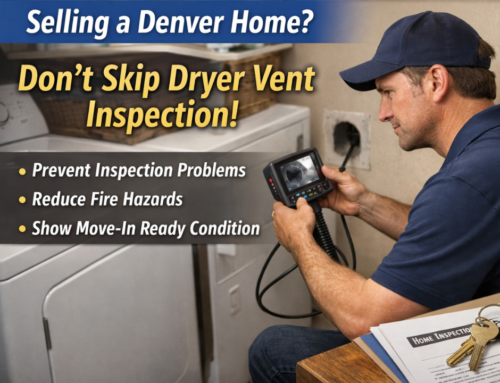
- Micro-Borescope Video Inspections: We look directly inside your walls to locate hidden clogs, disconnected joints, or damaged pipes.
- Pneumatic Air-Whip Sweeping: We safely clear away stubborn, ash-laden blockages without scratching or puncturing your ductwork.
Dryer Vent Safety FAQs
Can outdoor wildfire smoke really cause a dryer fire?
Yes. Heavy outdoor smoke carries fine ash and soot. When drawn into your dryer, this particulate matter mixes with damp laundry lint, forming sticky blockages that restrict airflow, trap extreme heat, and dramatically increase your dryer vent fire hazard risks.
What are the signs my dryer vent is dangerously clogged?
Look out for clothes taking multiple cycles to dry, an exceptionally hot laundry room, a musty or burning smell during operation, or external vent flaps that do not open when the machine is running.
Can I clean my dryer vent myself with a drill kit?
While DIY kits exist, they can easily get stuck, separate, or puncture flexible lines hidden inside drywall. Hiring a certified dryer vent specialist ensures the job is done safely and to local building codes.
Why is my dryer laundry room so hot and smoky during fire season?
If your laundry room feels drafty or smells like smoke when your dryer is off, your dryer draft blocker may be damaged or missing. This allows hot, smoky outdoor air to back-draft directly into your home.
How does proper dryer vent insulation prevent clogs?
Dryer vent insulation keeps the air inside the duct warm as it travels through unconditioned areas like crawlspaces. This stops the moisture in the exhaust from condensing, which prevents sticky ash and lint from clinging to the pipe walls.
How long does a professional dryer vent cleaning take?
A standard residential cleaning, airflow diagnostic test, and full safety inspection by dryer vent techs typically takes between 45 to 90 minutes.
Safeguard Your Home with Dryer Vent Techs
Protecting your Colorado home from seasonal fire risks means keeping a close eye on the hazards hiding right inside your walls. Don't let a clogged, smoky dryer line compromise your family's safety or run up your energy bills.
Contact Dryer Vent Techs today to schedule your certified diagnostic inspection and deep clean, and breathe easy knowing your home is fully protected.