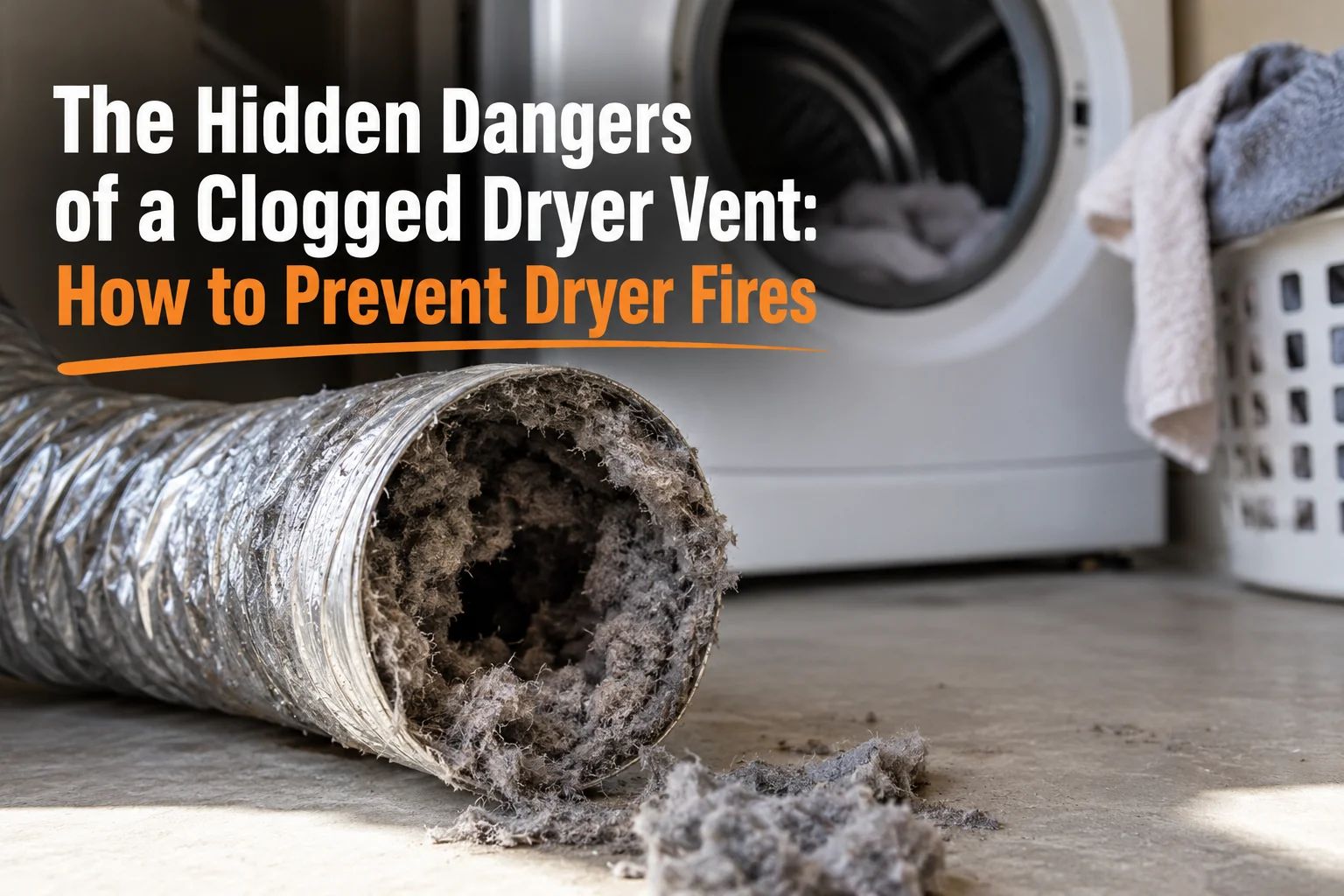
How to Prevent Dryer Fires
When homeowners think about serious house fire threats, they usually picture forgotten candles, overloaded electrical outlets, or unattended stoves.
However, one of the most dangerous fire hazards in your home is sitting quietly behind your washing machine, packed full of highly flammable lint.
According to the National Fire Protection Association (NFPA), clothes dryers account for nearly 15,000 residential structure fires every single year in the United States. The leading cause of these fires is simple: a failure to clean the dryer vent line.
As National Fire Prevention Month continues this October, taking time to check your exhaust line is critical for your home’s safety.
Scheduling a professional fall dryer vent cleaning is the best way to eliminate hidden hazards before heavy winter laundry demands begin, and Dryer Vent Techs is helping Front Range residents take action by offering a 10% dryer vent cleaning discount on any service throughout October!
Is your laundry room warmer than usual during drying cycles?
Don’t let a clogged exhaust line put your family or property at risk. Call (720) 257-8155 to schedule an inspection and claim your 10% Fire Prevention Month discount today!
Why Clogged Dryer Vents Are a Severe Fire Risk
Your clothes dryer works by blowing hot, dry air through a rotating drum to absorb moisture from wet fabrics. That humid exhaust air carries thousands of microscopic lint fibers out through your wall duct and to the exterior of your home.
While your removable lint screen catches about 60% of these fibers, fine dust constantly escapes past the trap and attaches to the interior walls of your exhaust pipe. Over time, this lint builds up into a thick, dry blanket inside your wall or attic run.
When airflow becomes restricted, heat cannot escape the appliance, causing internal cabinet temperatures to spike past 500°F. Since dried lint has an extremely low ignition point, trapped heat can easily spark an active fire inside the duct, turning your exhaust pipe into a flame-conduit through your walls.
The Top Warning Signs of a Clogged Dryer Vent
Your appliance usually gives clear warning signs long before a lint fire breaks out. If you notice any of these five red flags in your laundry room, stop running your dryer immediately:
- Clothes Take More Than One Cycle to Dry: If standard loads of towels or jeans take 60 to 90 minutes to dry, your exhaust path is choked.
- The Dryer and Laundry Room Feel Hot: Severe thermal backpressure forces heat outward, leaving your dryer running hot to the touch and heating up the room.
- A Burning or Musty Odor: Smelling scorched lint or burning fibers during operation means trapped dust near the heating element is scorching.
- Outside Vent Hood Flappers Stay Closed: Walk outside while the dryer runs. If the exterior louver flaps do not blow open vigorously, airflow is severely restricted.
- You Haven’t Cleaned the Line in 12 Months: Even if the appliance seems fine, annual buildup poses a hidden hazard that requires proactive dryer vent fire prevention.
Noticed a burning smell or long cycle times recently?
Protect your home by scheduling a cleaning with Dryer Vent Techs. Inquire about a quote and mention October Fire Prevention Month Discount to save 10%!
Residential vs. Commercial Fire Prevention Needs
Different properties face unique risk factors depending on daily laundry volume and duct layout.
Single-Family Homes & Condos
For standard households, an annual residential dryer vent cleaning keeps exhaust ducts clear and energy bills low. However, homes with large families, multiple pets, or complex duct runs through attics or roof stacks need cleaning every 6 to 9 months to maintain fire prevention month dryer safety.
Commercial Facilities & Multi-Family Housing
Commercial property managers, HOAs, hair salons, and pet groomers deal with extreme daily laundry loads. Heavy lint, hair product residues, and pet fur accumulate rapidly, creating severe liability hazards and building code violations. Commercial properties require a professional dryer vent cleaning service near me every 3 to 6 months to maintain compliance.
Professional Cleaning vs. The DIY Drill Kit Risk
Trying to clean a long duct run with a cheap plastic brush kit from a hardware store often creates bigger problems. Flimsy rods frequently snap off inside 20-foot wall cavities or puncture soft flexible transition hoses behind walls.
A certified dryer vent cleaning service uses commercial high-CFM reverse air whips and rotary steel rods that dislodge caked-on lint without damaging your ductwork. Industrial HEPA extraction vacuums pull all loosened debris out of your building, restoring full airflow velocity.
Learn about our complete line repair and duct upgrade services.
Avoid risky DIY kits and safeguard your home today!
Trust the local experts for reliable dryer vent maintenance Denver property owners count on. Call (720) 257-8155 to book your appointment!
Frequently Asked Questions (FAQs)
1. What is the most common cause of clothes dryer fires?
According to national fire safety statistics, failure to clean lint from exhaust vents is the #1 cause of residential clothes dryer fires.
2. Does cleaning the lint screen eliminate the fire hazard?
No. Removable lint screens catch only a portion of lint. Fine fibers constantly bypass the screen and accumulate inside wall ducts over time.
3. How often should I get fall dryer vent cleaning done?
Single-family homes should schedule professional cleaning at least once a year. Commercial facilities and high-use households should schedule service every 3 to 6 months.
4. Can a clogged dryer vent increase my electric or gas bill?
Yes. When restricted airflow forces your appliance to run multiple cycles for a single load, energy consumption and utility bills increase significantly.
5. Why is fall the most critical time to clean dryer vents?
Cold outdoor temperatures chill metal ductwork, causing warm exhaust moisture to condense inside pipes. Wet duct walls trap passing lint, creating stubborn clogs fast.
6. What type of transition hose is safest behind the dryer?
Semi-rigid or rigid aluminum pipe is required by building codes. Plastic and flexible foil accordion hoses easily crush, trap lint, and catch fire.
7. How much can I save with the October dryer vent cleaning discount?
During October, Dryer Vent Techs is offering a 10% discount on all residential and commercial dryer vent services for Fire Prevention Month. Call today and mention the discount to redeem.
Protect Your Home & Claim Your 10% October Discount!
Don’t wait for a warning sign or an appliance breakdown to prioritize fire safety. Clearing your exhaust line protects your family, cuts energy costs, and keeps your dryer running efficiently all winter long.
Mention Fire Prevention Month Discount when booking to save 10%!
- Call Us Direct: (720) 257-8155
- Online Inquiries: dryerventtechs.com/contact-us/
- Service Areas: Proudly serving Littleton, Denver, Morrison, Lakewood, Aurora, Centennial, Grand Junction, Highlands Ranch, and surrounding Front Range communities. View our full service area map at dryerventtechs.com/contact-us/.