It is late August across the Front Range, and while afternoon temperatures are still warm, early morning gusts bring an unexpected chill. If you walk past your laundry room and feel a breeze, your dryer exhaust line is likely sending cold air straight into your home.
Having cold air coming through dryer vent lines is a common issue for local homeowners, but it is one you should resolve quickly. Leaving a drafty exhaust path open wastes expensive climate control energy, invites pests inside, and signals that your laundry exhaust setup needs maintenance.
Why Is Outdoor Air Entering Your Home?
Your laundry exhaust system is engineered as a one-way path meant to push hot, humid air outside. When cold air flows backward into your utility space, it means a mechanical seal or backdraft damper has failed along the run.
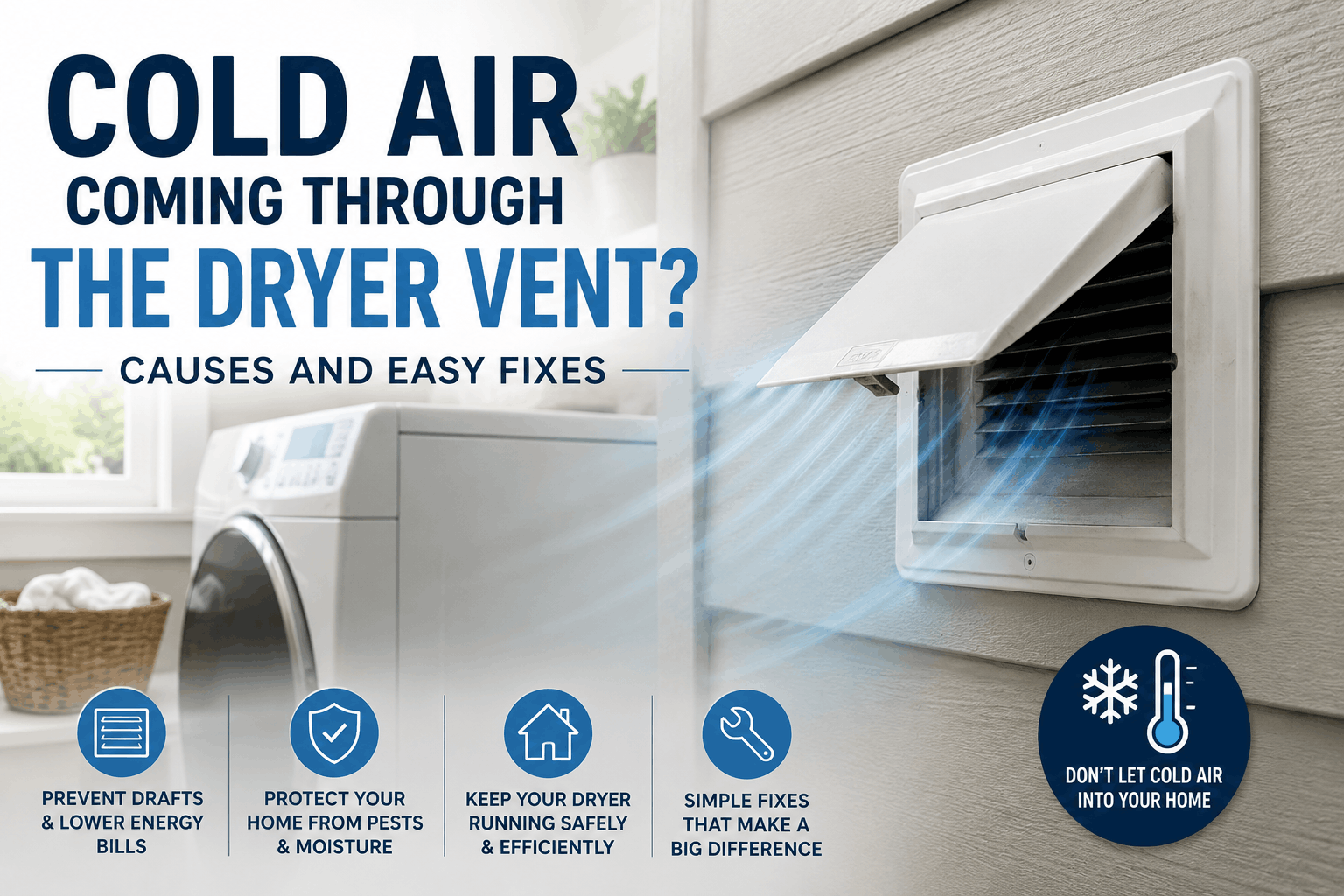
In most residential setups, the exterior hood features a gravity flapper or louvered doors that open during cycles and snap shut when finished. When lint buildup, rust, or physical weather damage jams those doors open, outdoor air rushes straight indoors.
Key Takeaway: A jammed exterior flapper acts like an open window in your laundry room, forcing your HVAC system to work overtime.
Root Causes of Dryer Vent Drafts
Fixing a drafty exhaust line requires identifying where the mechanical failure is happening. Here are the primary culprits our technicians see when inspecting local homes.
Broken or Jammed Exterior Dampers
Exterior vent caps endure intense sun, hail, and strong mountain winds throughout the year. Over time, plastic louvers crack or become packed with sticky lint, keeping the flap permanently open.
Crushed or Disconnected Transition Hoses
The flexible pipe behind your appliance can easily get crushed, kinked, or detached when moving machines. When that line tears inside a wall cavity, cold outdoor air leaks directly into your living space.
Uninsulated Ductwork in Unconditioned Spaces
Exhaust pipes passing through unheated crawlspaces, attics, or garages need thermal insulation. If you are researching how to keep air ducts from sweating, insulation prevents warm exhaust air from condensing into water inside cold walls.
DIY Troubleshooting vs. Professional Vent Repair
There are a few basic checks you can perform today to pinpoint the source of the draft. However, structural repairs and internal duct retrofits require specialized tools and code-compliant materials.
What You Can Check Yourself
Walk outside while your laundry appliance is running to see if the exterior louvers open freely. Once the cycle ends, verify whether the flapper drops fully shut or remains propped open by lint.
Next, slide your machine forward carefully and inspect the flexible hose behind it. If the foil material looks torn, crushed, or loose at the connection, you need a mechanical repair.
When to Call a Repair Specialist
If your exterior hood is clear but drafty air still enters, an internal wall damper may be broken. In these cases, simple cleaning won’t solve the issue—you need a professional to repair dryer vent components directly.
- Transition Hose Upgrades: A technician can complete a full dryer vent hose repair, replacing soft foil tubing with durable semi-rigid metal.
- Line Replacement: If your internal duct is corroded, rusted, or improper plastic, scheduling a dryer duct replacement restores safety and airflow.
- Professional Installation: Searching for dryer duct installation near me connects you with technicians who route smooth, rigid metal pipe that meets local building codes.
Should You Switch to a Ventless Dryer?
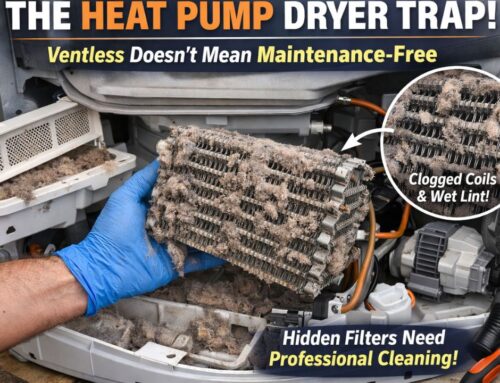
Homeowners dealing with persistent drafting issues sometimes ask if switching to a ventless dryer is the easiest solution. While ventless models do not require an exterior wall hole, they bring distinct trade-offs to consider.
Ventless systems operate much slower, taking up to twice as long to dry a standard load of laundry. They also release ambient heat into your utility room, which can raise indoor temperatures during hot summer months.
For most Colorado properties, keeping your traditional vented setup and scheduling a professional dryer vent cleaning service or damper repair is far more cost-effective. A properly sealed, clean duct delivers maximum drying speed and lower utility bills.
Why Combine Vent Repair with Line Cleaning?
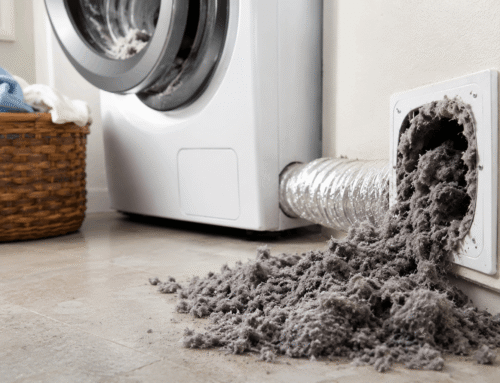
When a technician arrives to fix a drafty wall damper or replace crushed ducting, clearing the entire line at the same time is essential. Heavy lint accumulation is usually what caused the flapper to jam open in the first place.
Clearing the pipe restores full exhaust velocity so your appliance runs safely and efficiently. Combining line repairs with thorough cleaning eliminates fire hazards and stops drafts in a single service call.
Protect Your Home with Local Vent Specialists
Don’t let a drafty exhaust line compromise your indoor comfort or drive up your monthly energy bills. Restoring a proper exterior seal keeps outdoor weather outside where it belongs.
At Dryer Vent Techs, we handle complete line diagnostic checks, damper retrofits, rigid duct upgrades, and deep line cleaning for residential properties, apartment complexes, senior homes, and commercial locations like hair salons.
Frequently Asked Questions
Why is cold air coming through my dryer vent when it is turned off?
The exterior vent cap has a flapper or louvers meant to snap shut when the dryer stops. If lint or rust jams it open, outside air flows freely backward into your laundry room.
Can cold air coming through a dryer vent freeze my pipes?
Yes, heavy cold drafts coming through uninsulated or ruptured exhaust lines can drop temperatures in nearby wall cavities enough to freeze adjacent water pipes.
How do I stop cold air from coming through my dryer vent?
Clear all lint debris from the exterior vent hood, replace damaged flappers, and upgrade soft foil transition hoses to semi-rigid metal with a spring-loaded backdraft damper.
Is a backdraft damper necessary for a dryer vent?
Yes, a backdraft damper is essential—especially in windy climates—to ensure air only flows outdoors while blocking wind, cold air, and pests from entering.
How do I keep my dryer duct from sweating?
Wrap uninsulated ductwork passing through unheated attics or crawlspaces with thermal insulation sleeves to prevent warm exhaust moisture from chilling into water droplets.
Can I put a cover or towel over my dryer vent to stop drafts?
Never block an active dryer vent path with towels or tight covers while in use, as restricting airflow creates an extreme fire hazard and damages dryer motors.
Should I replace my dryer hose if cold air is leaking behind the machine?
Yes, if your transition hose is crushed, torn, or made of thin plastic foil, replacing it with a semi-rigid aluminum hose stops drafts and restores proper airflow.
Is switching to a ventless dryer better than fixing a drafty vent?
Ventless dryers avoid exterior wall holes, but they dry much slower and emit ambient heat into the room. Fixing your existing line is generally cheaper and more efficient.
Ready to Stop Drafts and Lower Your Energy Bills?
Stop letting outdoor air ruin your home’s comfort and force your climate control systems to overwork. Let our team inspect, repair, and clear your exhaust system today.
Call Dryer Vent Techs at (720) 257-8155 to schedule your vent repair and draft inspection. Proudly serving Littleton, Denver, Morrison, Lakewood, Aurora, Centennial, Grand Junction, Highlands Ranch, and surrounding communities.